Public resource
Jaw Exercises
This handout provides information and a structured exercise and advice plan to support jaw function and reduce the impact of bruxism. Your program should be tailored to your assessment findings.
The goal
Reduce jaw and facial tension, improve jaw control and awareness, and support healthy function.
Consistency is more important than intensity.
Key principles
- Jaw muscles should be relaxed at rest.
- Avoid clenching and teeth contact when not eating or swallowing.
- Move within a comfortable range.
- Small, consistent steps over time create the biggest change.
Important
- This program is general in nature.
- Stop any exercise that increases pain.
- Persistent or worsening symptoms should be re-assessed.
- This handout does not replace an individual clinical assessment.
Exercise progression overview
- 1. Awareness & Relaxation (Weeks 1–2) — Reduce resting tension, improve awareness of clenching, establish relaxed jaw posture.
- 2. Controlled Movement (Weeks 2–4) — Restore comfortable jaw movement and control in all directions.
- 3. Strength & Endurance (Weeks 4–6) — Build endurance and control of jaw and neck muscles to support function.
- 4. Functional Integration (Weeks 6+) — Apply control to daily activities: chewing, speaking, yawning and stress management.
Dosage guide
- Frequency: 1–3 times per day
- Repetitions: 6–10 unless stated
- Hold Time: 5 seconds (isometrics)
- Rest: Rest if you feel fatigue.
Exercise rules
- Stay within a pain-free range.
- Move slowly and with control.
- Stop if you feel increased pain.
- Quality over quantity.
Advice to support your progress
- Be aware of clenching — Check your jaw throughout the day.
- Sleep support — Good sleep habits can help reduce night-time clenching.
- Stress management — Stress can increase jaw tension.
- Limit stimulants — Caffeine and alcohol can increase jaw activity.
- Chew smart — Avoid excessive chewing (gum, hard foods).
Tongue posture & “mewing”
Resting tongue posture: placing the tongue gently against the roof of the mouth may be relevant to jaw and oral posture.
Teeth and lip position: lips can rest gently closed. Teeth should not be held tightly together — avoid unnecessary clenching.
Head and neck alignment: head and neck position may influence loading around the jaw and surrounding structures.
Hard mewing: forceful or prolonged tongue pressure is not recommended as a self-treatment strategy and may aggravate jaw muscle tension or clenching.
If you experience persistent jaw pain, locking, significant clicking, or difficulty opening or closing the mouth, seek appropriate professional assessment rather than trying to force the jaw or tongue into a particular position.
Contraindications / red flags
Do not perform exercises or seek urgent assessment if you have:
- Recent jaw fracture or surgery
- Unexplained swelling or infection
- Severe pain at rest
- Numbness, tingling or weakness in the face
- Locking that you cannot self-correct
Regressions
- Reduce range of movement
- Reduce resistance
- Reduce repetitions
- Increase rest time
- Focus on relaxation and awareness
Progressions
- Increase range of movement
- Increase resistance
- Increase hold time
- Increase repetitions
- Add functional tasks
Research support
The handout states that the program is informed by evidence supporting exercise for TMJ disorders and bruxism, including improvements in pain, jaw function, muscle activity and quality of life.
Jaw Relaxation & Awareness
Resting jaw position training.
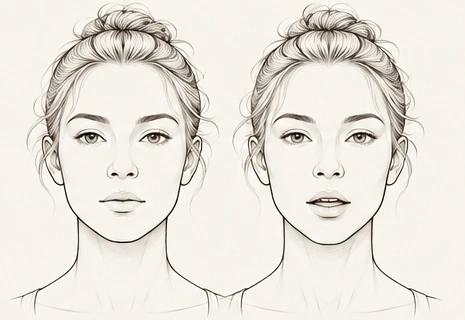
Focus
Lips together, teeth apart, jaw muscles relaxed, nasal breathing.
Suggested format 1–2 min · 2–3 × / day
Controlled Opening
Pain-free range opening.
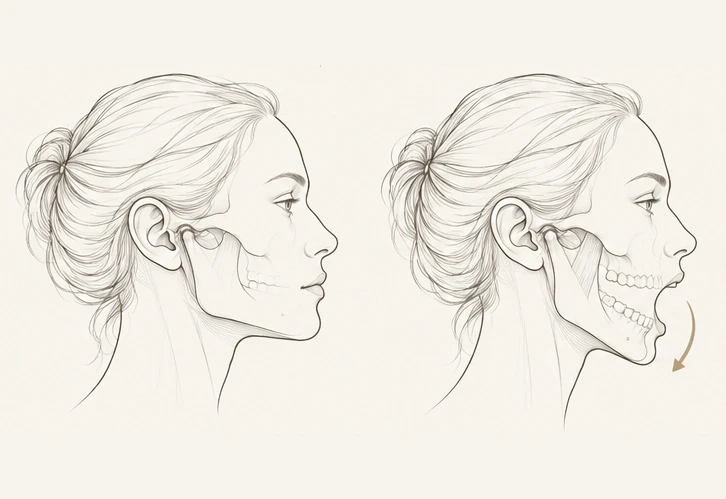
Focus
Slow, controlled opening within a comfortable range.
Suggested format 6–10 reps · 2–3 × / day
Lateral Glides
Side-to-side jaw movement.
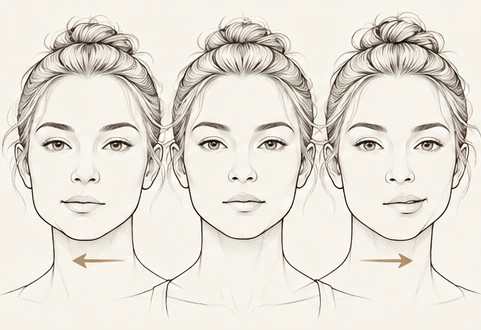
Focus
Move the jaw gently side to side within a comfortable range.
Suggested format 6–10 reps each side · 2–3 × / day
Protrusion Control
Forward jaw movement.
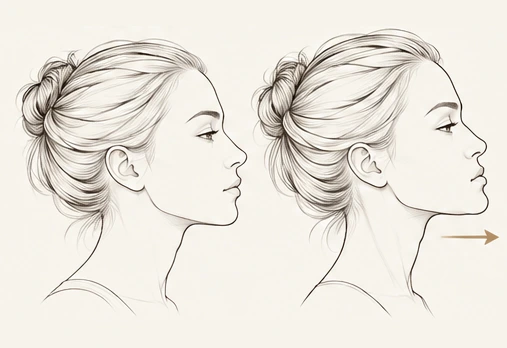
Focus
Slide jaw forward gently and return.
Suggested format 6–10 reps · 2–3 × / day
Resisted Jaw Strengthening
Gentle isometric resistance.
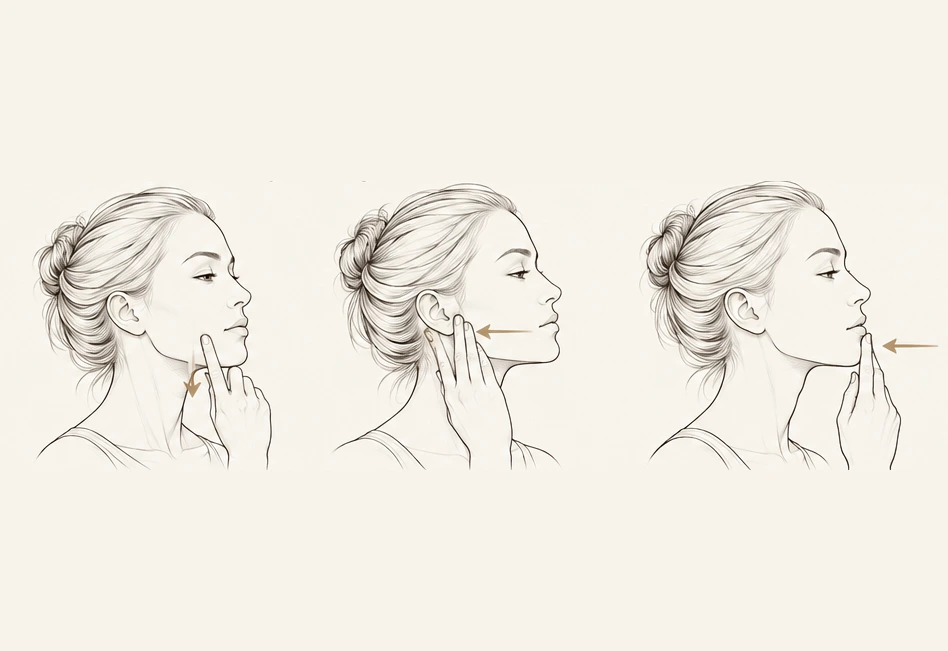
Focus
Light resistance in multiple directions. No pain.
Suggested format 1–2 × / day · 5 × 5 sec each direction
Neck & Posture Support
Neck mobility and postural control.
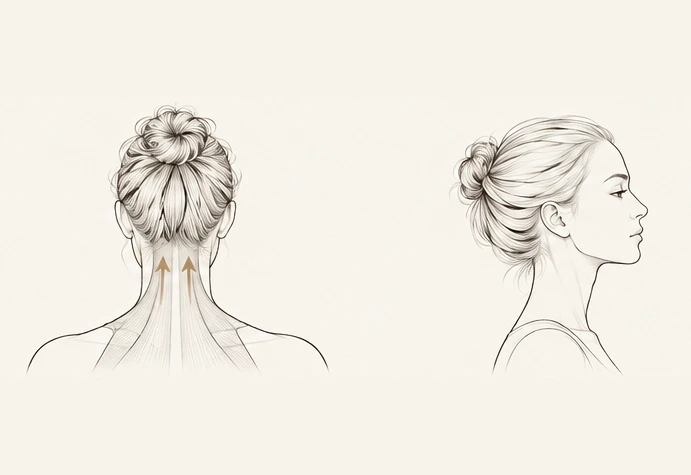
Focus
Support neck mobility, posture and breathing awareness.
Suggested format 5–10 min · Daily
General educational information from the practice — not personalised advice or a prescription. If anything is painful, stop. Book an appointment for guidance specific to you.